
By Joan Vata
More than six decades after Independence, Kenya is still confronting one of the three enemies the founding fathers identified as a threat to the young nation: disease.
The others were ignorance and poverty. These, too, are a never ending journey despite efforts by successive regimes to tackle them.
The country has tried several approaches to make healthcare affordable and accessible, but the promise of universal health coverage has remained elusive.
The latest—and most ambitious—attempt is the Social Health Authority (SHA), which replaced the National Hospital Insurance Fund (NHIF) on October 1, 2024. This is anchored on the principle of Universal Health Care; which is quality, accessible and affordable.
Nearly two years into the rollout, the government says the numbers show significant progress. But beneath the impressive registration figures and billions of shillings spent lies a harder question: are Kenyans actually getting the healthcare they were promised?
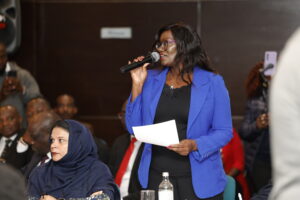
That question hung over the Kenya Health Summit Media Town Hall in Nairobi, where health officials defended the reforms while acknowledging persistent problems with contributions, fraud, healthcare workers, digital systems, public awareness and the range of services covered.
The SHA transition followed the Social Health Insurance Act, 2023, which dismantled the NHIF framework and created a new financing structure built around three funds: the Social Health Insurance Fund (SHIF), the Primary Healthcare Fund and the Emergency, Chronic and Critical Illness Fund.
The government presented the new system as a fundamental overhaul of healthcare financing rather than simply a change of name. It promised broader coverage, greater financial protection and stronger primary healthcare.
The transition, however, was contentious from the start.
The government had initially targeted earlier dates for the changeover and established a transition committee in January 2024. By September, the Ministry of Health acknowledged a major funding gap, saying only Sh6.1 billion had been allocated against an estimated Sh168 billion required to implement the comprehensive benefit package.
SHA was nevertheless launched on October 1, 2024, with the government promising an orderly transition from NHIF and continuity of services.
Nearly two years later, Health Cabinet Secretary Aden Duale says 32.2 million Kenyans—60.4 per cent of the population—are registered under SHA. That compares with about eight million people covered by NHIF.
He said the government had paid Sh164 billion, covering 48,027 cancer treatments, more than 469,000 surgeries and 1.24 million safe deliveries.
The government has also allocated Sh19 billion in the current financial year to primary healthcare, allowing registered Kenyans to access services at Level 2 to Level 4 facilities without paying at the point of care. But the registration figure comes with an important caveat.
SHA Chief Executive Officer Dr Mercy Mwangangi acknowledged that registration does not necessarily mean regular contribution, particularly among informal-sector workers and people with unpredictable incomes. “SHIF is a contributory fund. You contribute to it to access the benefits,” she said.
This leaves unemployed young Kenyans and others without stable incomes particularly exposed. They may be registered but unable to make regular payments.
SHA is using proxy means testing to determine contributions for people whose incomes vary, Dr Mwangangi said. The government has also established a social programme for indigent and vulnerable Kenyans who cannot contribute.
SHA is further exploring an agency model through which agents would reach people in the informal sector and assist them to make contributions.
The shift from NHIF to SHA has also changed how hospitals process claims. Dr Mwangangi identified change management and fraud as major challenges.
Under NHIF, facilities submitted physical files and claims through different offices. SHA has moved to digital processing, requiring hospitals and healthcare workers to adapt to new systems while familiarising themselves with the new benefits structure.
The CEO acknowledged that public education remains inadequate. Fraud is another concern. She said it involved SHA employees, healthcare providers and members of the public.
Duale said the government had recovered nearly Sh300 million from fraudulent claims, while other cases were being pursued through investigations, alternative dispute resolution and the courts. He also warned health facilities against charging patients for services covered by primary healthcare.
Public, private and faith-based facilities that charge for covered primary healthcare services, he said, are committing a criminal offence. Duale said Sh27 billion had been invested in primary healthcare over the past 18 months.
More than 107,800 community health promoters have also been recruited and trained, supported by 277 primary healthcare networks.
According to Duale, the promoters have reached approximately 2.7 million households through the electronic community health information system. The reforms are also unfolding against continuing labour disputes in the health sector.
Council of Governors Chief Executive Officer Mary Mwiti said labour unrest had declined significantly, although nurses and clinical officers remained on strike in some counties.
The outstanding disputes involve promotions, remuneration and implementation of collective bargaining agreements, she said. The CoG and affected counties are continuing talks with health-worker unions to resolve the disputes and restore full services.
Medicine availability remains another pressure point. KEMSA Chief Executive Officer Dr Waqo Dulacha Ejersa said the government was strengthening the availability of essential medicines and medical supplies in public facilities.
He said efforts were under way to address supply challenges and ensure facilities receive medicines consistently.
Digital Health Agency Chief Executive Officer Antony Lenaiyara said technology was central to the reforms.
The government is providing digital devices and internet connectivity to public facilities while developing three health data centres in different parts of Kenya.
A single digital health identity is also being developed to allow patient information to follow patients across facilities without depending entirely on physical records.
Lenaiyara said measures were being put in place to ensure health data is stored within Kenya and protected under data-protection regulations.
The government is also investing in infrastructure.
Duale said Sh9.688 billion had been spent on modern medical equipment in 239 health facilities across 44 counties under the National Equipment Service Programme.
Kenya has established 25 public health emergency operation centres to improve preparedness for disease outbreaks.
Health officials also reported a decline in malaria cases from 105,000 to 72,000, attributing the reduction to vector control, insecticide-treated nets and vaccination. The government plans to distribute another 10.8 million mosquito nets in 18 high-burden counties over the next 12 months.
Duale’s message to journalists was unusually direct: do not simply repeat government statistics. He urged journalists to visit health facilities, speak to patients and community health promoters and independently test data provided by national and county governments.
The Ministry of Health is also planning a more coordinated communication system to help journalists obtain official information and responses to questions about the sector.
That scrutiny will matter because the SHA story cannot be told through registration numbers alone.
Officials acknowledge that some services, including dental and optical care, remain limited under the current benefits package.
Dr Mwangangi said the package was under review as the government considers expanding coverage.
For Kenya, the stakes are high. The country has changed the architecture of health insurance, invested billions in primary healthcare and enrolled millions of people in the new system. But the ultimate measure of SHA will be simpler than any government statistic.
It will be whether a Kenyan who needs treatment can get it without being turned away, asked for money they cannot afford or forced to navigate a system they do not understand. After decades of promises, that is the measure that matters.
